
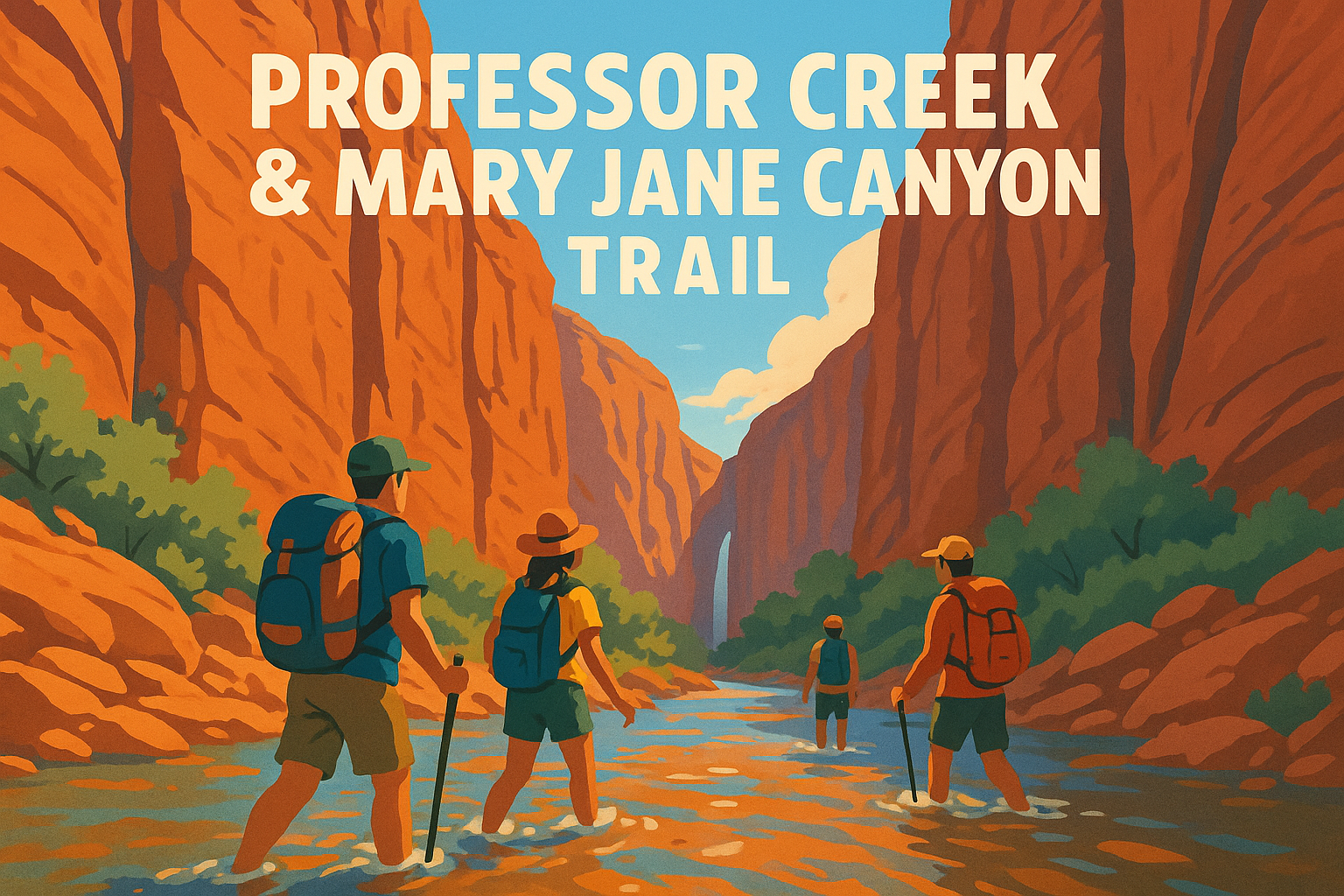
Professor Creek & Mary Jane Canyon Trail: Moab’s Hidden Waterfall Hike
Moab is famous for its arches and red rock spires, but if you’re craving a hike that’s cooler, quieter, and off the beaten path, the Professor Creek and Mary Jane Canyon Trail is where you want to go. This hike follows a flowing desert creek through towering sandstone walls and ends at a hidden waterfall. It’s a refreshing change of pace, especially on hot days.
I’ve hiked this trail in every season, often with friends and sometimes with my dog, and it always delivers something memorable. Below you’ll find everything you need to plan the perfect outing — from directions and trail breakdowns to safety tips, FAQs, and nearby recommendations.
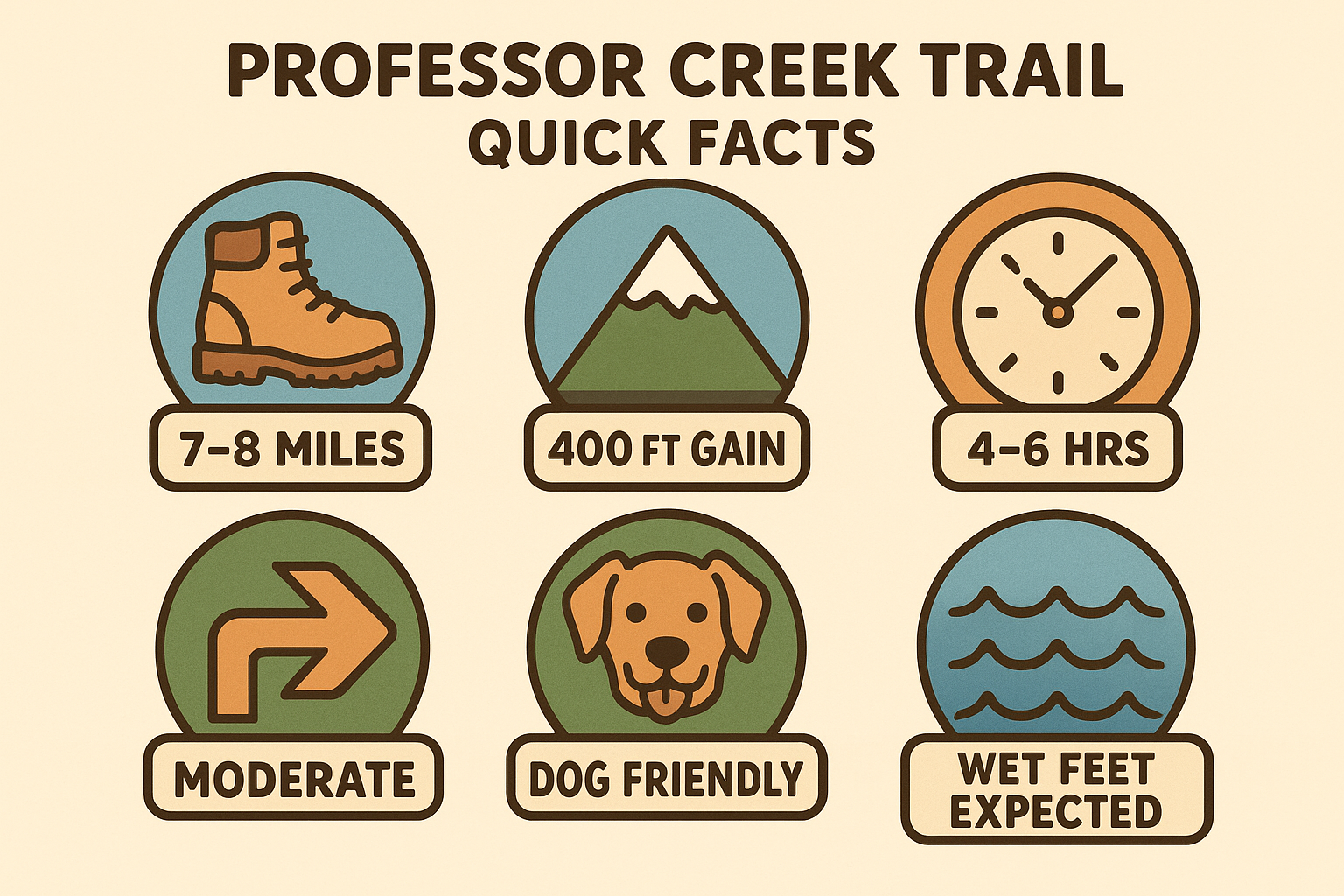
Quick Facts
Distance: 7–8 miles round trip
Elevation Gain: ~400 feet
Difficulty: Moderate (lots of water crossings, uneven footing)
Time Required: 4–6 hours
Trail Type: Out-and-back
Best Seasons: Spring and fall; summer possible with early start
Dog-Friendly: Yes, but be prepared for mud and water
Water Crossings: Frequent — expect wet feet
Getting to the Trailhead
From Moab, drive north on US-191 for about 15 miles. Turn right onto UT-128, a scenic highway that follows the Colorado River. Drive 23 miles along this road until you reach the parking area for Mary Jane Canyon / Professor Valley. The trailhead is on the left, marked by a dirt pullout.
Driving time from Moab: ~40 minutes
Road conditions: Highway is paved; parking lot is dirt but usually fine for passenger cars
Facilities: None — no restrooms, water, or trash cans
👉 Pro Tip: Stop for photos along Highway 128. You’ll pass Fisher Towers and Castle Valley, two of the most photographed landscapes in the region.
Trail Breakdown: What to Expect
1. The Approach (0–0.5 miles)
The trail starts across open desert flats with little shade. The creek is visible ahead, and within 10–15 minutes you’ll reach it. This stretch can feel hot in summer, so get moving early.
2. First Creek Crossings (0.5–2 miles)
Once you drop into the creek, the fun begins. You’ll cross back and forth dozens of times — sometimes over rocks, sometimes directly through the water. Don’t fight it; your feet will get wet. The canyon walls start to rise as you move further in.
3. Deep Canyon Stretch (2–3.5 miles)
The canyon narrows and the walls grow taller. Depending on the season, water levels may be ankle- to knee-deep. In spring runoff, expect stronger currents. Watch your footing, especially on mossy rocks.
4. The Waterfall (3.5–4 miles)
You’ll hear it before you see it: a 30-foot waterfall crashing into a shaded pool at the end of the canyon. This is your turnaround point. It’s the perfect place for a snack, photos, or simply sitting back to enjoy the cool air before heading out the way you came.
Seasonal Conditions
Spring (March–May): High water from snowmelt. Crossings may be thigh-deep in early spring.
Summer (June–August): Start early to beat the heat. The water makes this hike a great escape from Moab’s 100-degree days.
Fall (September–November): My favorite season here. Lower water levels, cooler temps, and golden cottonwoods along the creek.
Winter (December–February): Not recommended. Ice forms on the rocks and water is frigid.
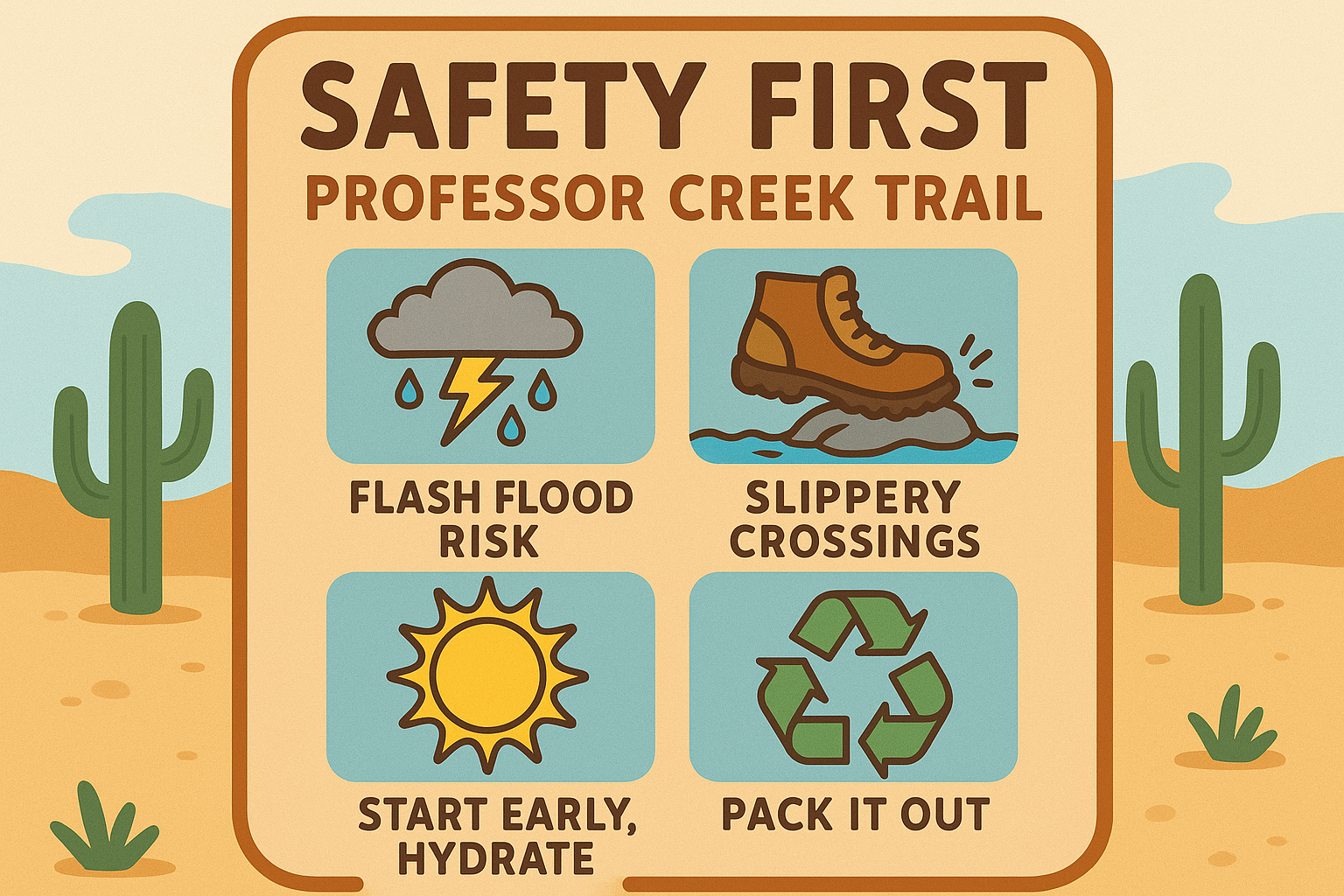
Safety Callouts
⚠️ Flash Flood Risk: Do not hike if rain is in the forecast, even miles away. Canyon sections can fill rapidly.
⚠️ Footwear: Wear sturdy shoes that can get soaked. Sandals without straps or flip-flops are dangerous.
⚠️ Heat: The approach is fully exposed. Start early, carry 2–3 liters of water, and wear a hat and sunscreen.
⚠️ Parking: Do not leave valuables in your car. Trailhead parking is visible from the road.
⚠️ Leave No Trace: Stick to the main path, don’t trample creek banks, and pack out all trash.
Expert Tips From Experience
Photography: The waterfall is shaded midday. For the best light, hike late afternoon in spring or fall.
Dogs: Bring a towel for muddy paws — your car will thank you.
Gear: Trekking poles help with slippery crossings. A lightweight backpack with dry snacks works best.
Timing: Allow a full half-day. It’s not a hike to rush; enjoy the canyon atmosphere.
Side Trip: Combine with the nearby Fisher Towers Trail for a two-hike day.
FAQs Professor Creek Trail
Do I need a permit?
No permit is required, and parking is free.
Can I swim at the waterfall?
You can wade in, but it’s shallow and cold. Most hikers just cool off briefly.
Is this trail kid-friendly?
Older kids who enjoy creek play will love it. The distance may be too much for younger children.
Can I hike in sandals?
Only if they have straps (like Chacos or Tevas). Trail runners or old hiking shoes are safer.
Is it crowded?
It’s far less busy than Arches or Canyonlands. You’ll often have the canyon to yourself, especially in the morning.
What to Bring
Trail shoes or sandals with straps
Trekking poles (optional but useful)
2–3 liters of water per person
Snacks or picnic for the waterfall
Hat, sunscreen, sunglasses
Small towel if hiking with dogs
Nearby Highlights Along UT-128
Fisher Towers Trail – 4.5 miles round trip, iconic spires and desert views
Onion Creek Road – Scenic drive with colorful badlands and stream crossings
Castle Valley Overlook – Stunning viewpoint of the red rock valley and La Sal Mountains
Why Hike Professor Creek and Mary Jane Canyon?
This trail gives you everything Moab is known for — red rock walls, water, adventure — without the crowds. Every step deeper into the canyon feels like you’re discovering something secret, and the waterfall finale seals the deal.
If you want an authentic Moab hiking experience that feels a little wild, put this trail on your list.
Next Steps
Download the GPX file before leaving Moab (cell service is spotty).
Grab a snack in town afterward. I recommend Milt’s Stop & Eat for burgers or Antica Forma for pizza.
Plan a full day. Pair the hike with Fisher Towers or a Castle Valley drive.
Download the free PDF Trail Guide for quick facts, safety tips, and a map you can take offline.