Hiking the Porcupine Rim Trail
Most people know the Porcupine Rim Trail as one of the most famous mountain bike rides on Earth. What many don’t realize is that it’s also one of the best long hikes in Moab. The trail delivers huge views of Castle Valley, challenging elevation, and the sense of standing on the edge of the world.
I’ve hiked this trail many times, and every trip offers something new—a shifting light on the La Sal Mountains, a hawk soaring along the cliffs, or that first glimpse of Castleton Tower rising from the valley floor. Here’s everything you need to know to plan your hike.
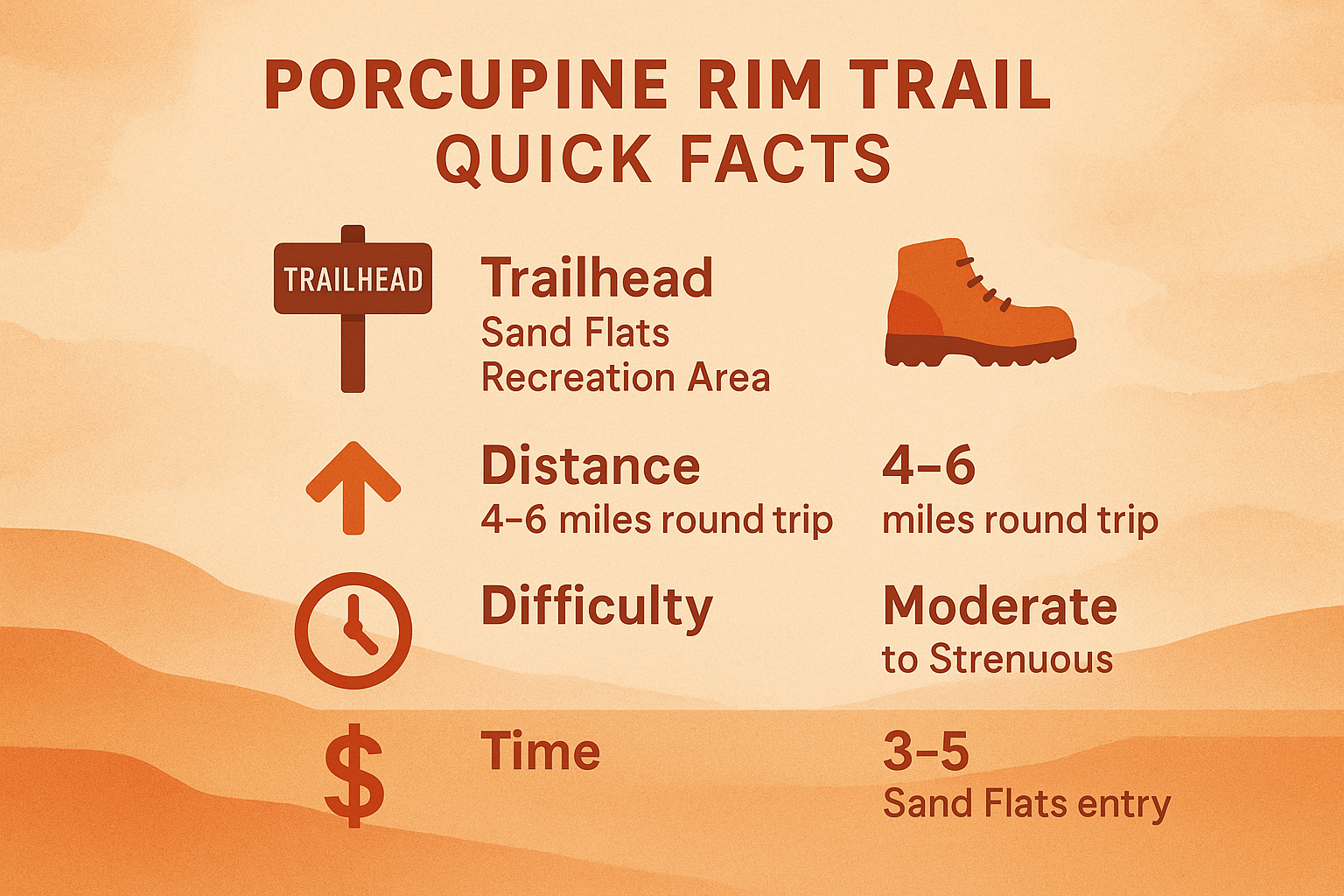
Quick Facts
-
Trailhead: Porcupine Rim Trailhead, Sand Flats Recreation Area
-
GPS Coordinates: 38.5735° N, 109.4508° W
-
Distance: 4–6 miles round trip for hikers (to rim overlooks and back)
-
Elevation Gain: ~1,000 feet
-
Difficulty: Moderate to strenuous
-
Time Required: 3–5 hours, depending on turnaround point
-
Best Season: Spring (Mar–May) and Fall (Sep–Nov)
-
Fee: $5 per vehicle, Sand Flats Recreation Area day-use fee
-
Dogs: Allowed on-leash, bring extra water
-
Facilities: Parking lot, vault toilet at trailhead
Getting to the Trailhead
From downtown Moab:
-
Head east on East 300 South until it turns into Sand Flats Road.
-
Drive about 6.5 miles into the Sand Flats Recreation Area.
-
Pass the entrance station ($5 fee; bring cash or card).
-
Look for the signed Porcupine Rim Trailhead on the right.
Parking is limited but usually available. There’s a vault toilet, but no water—fill up in town before heading up.
Nearby camping: Sand Flats Recreation Area has multiple campgrounds, which makes this hike easy to pair with an overnight stay.
Hiking the Porcupine Rim Trail: What to Expect
Mile 0–0.5: The Warm-Up
The trail begins on a rocky jeep road with steady uphill climbing. Expect loose stone and exposed sun. You’ll feel the elevation gain quickly.
Mile 1–2: Reaching the Rim
The trail climbs toward the rim, where the desert opens up to expansive views. This section rewards your effort with panoramas of the La Sal Mountains and first glimpses into Castle Valley.
Mile 2: The Overlook
At about two miles in, you reach the Porcupine Rim Overlook—a breathtaking viewpoint over Castle Valley. Landmarks like Castleton Tower, The Priest and Nuns, and The Rectory rise dramatically from the desert floor.
This is the most popular turnaround point for hikers. Bring lunch, sit back, and watch the shadows shift across the valley.
Mile 3–4: Extending the Adventure
If you’re up for more, continue along the rim. Each bend offers new perspectives and more solitude. Beyond 4 miles, the trail begins its descent toward the Colorado River—a section better suited for mountain bikers.
Best Time to Hike
-
Spring (Mar–May): Wildflowers along the Sand Flats Road and comfortable temps.
-
Summer (Jun–Aug): Only safe in very early morning; extreme heat risk.
-
Fall (Sep–Nov): Crisp air and golden light—ideal for photography.
-
Winter (Dec–Feb): Quiet and peaceful, but icy patches possible at the rim.
Safety Tips
⚠️ Heat Warning: This trail is fully exposed. Carry at least 3 liters of water per person in warm weather.
⚠️ Sheer Drop-offs: The rim has vertical cliffs. Stay well back from the edge, especially with children or dogs.
⚠️ Shared Trail: Expect mountain bikers. Step uphill, make eye contact, and let them pass.
⚠️ Emergency Access: Rescue response is slow. Carry a GPS beacon or download offline maps.

What to Bring
-
3 liters of water minimum
-
Sun hat, sunglasses, sunscreen
-
Sturdy hiking shoes with good traction
-
Snacks or a packed lunch
-
GPS or offline map (Gaia, AllTrails, or similar)
-
Camera—wide-angle lens for rim views, zoom for Castleton Tower
Photography Tips
-
Sunrise: Best light on Castle Valley, but the hike requires an early start in the dark.
-
Midday: La Sal Mountains stand out vividly against the red rock rim.
-
Sunset: Rim cliffs glow, but watch your timing—don’t hike back in the dark without a headlamp.
-
Best spot for photos: Porcupine Rim Overlook at mile 2.
FAQs Porcupine Rim Trail
Is the Porcupine Rim Trail worth it for hikers?
Yes—while famous for biking, hikers who focus on the rim portion are rewarded with stunning overlooks and fewer crowds.
How long does the hike take?
Most hikers spend 3–5 hours for the 4–6 mile round trip.
Do I need a permit?
No permit required. A $5 day-use fee covers entry to Sand Flats Recreation Area.
Are dogs allowed?
Yes, on-leash. Bring extra water and keep them away from cliff edges.
Is the trail family-friendly?
Not for small kids—the trail is long, exposed, and has dangerous drop-offs.
Porcupine Rim vs Other Moab Hiking Trails
-
Fisher Towers Trail: Similar Castle Valley views, but shorter and less busy.
-
Dead Horse Point State Park: Safer rim overlooks, better for families.
-
Slickrock Trail Overlook Loop: Inside Sand Flats, shorter with equally big panoramas.
Next Steps for Planning
-
Download a GPX file of the hike to your phone.
-
Pack food and water before leaving Moab—there are no services in Sand Flats.
-
Consider pairing this hike with a scenic drive up the La Sal Mountain Loop Road for a full day of adventure.
-
If you want something shorter after Porcupine Rim, explore the Slickrock Trail practice loop just down the road.
Final Thoughts
The Porcupine Rim Trail is one of Moab’s best long hikes. It’s challenging, rewarding, and gives you a front-row seat to Castle Valley’s dramatic towers. While bikers may dominate the full route, hikers who explore the rim section will find solitude, scenery, and a chance to experience Moab’s backcountry beyond the national parks.
Bring water, respect the cliffs, and take your time at the overlook. This is the kind of hike that stays with you long after your boots are dusty.